
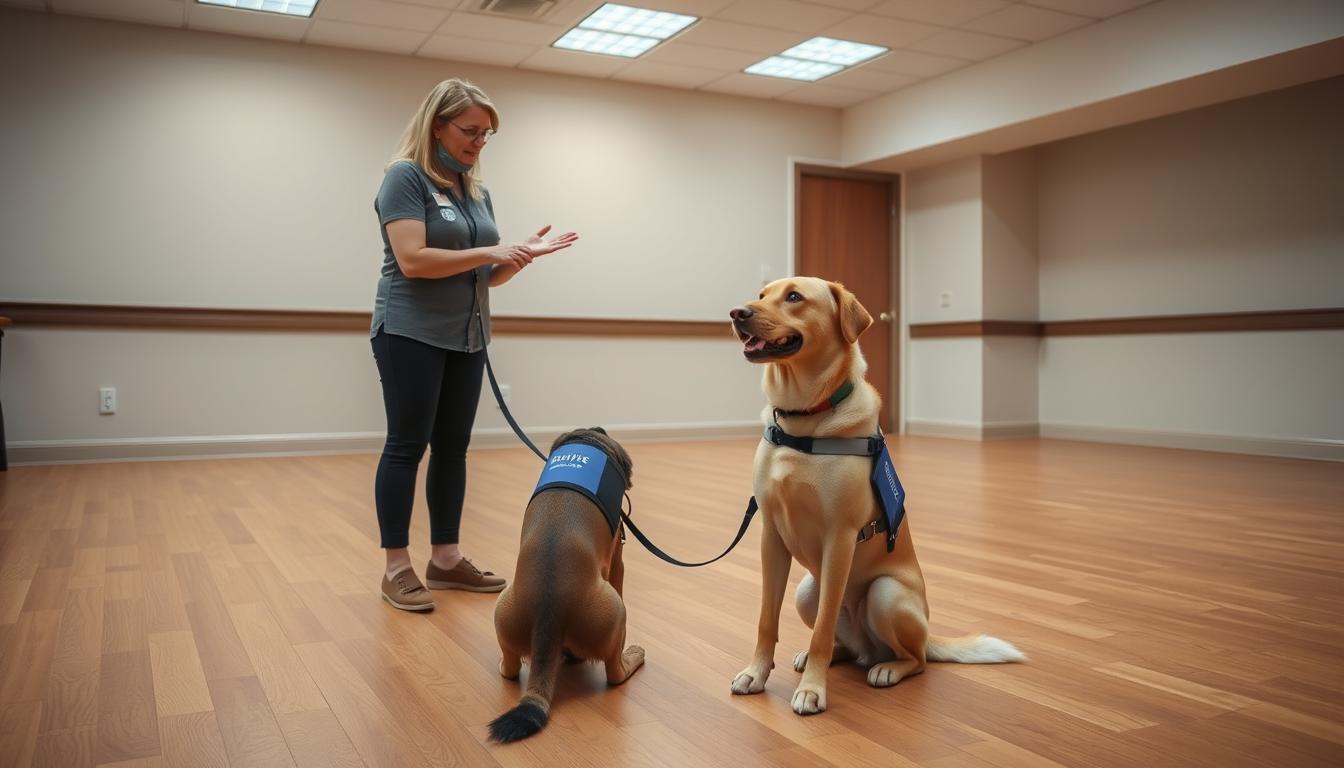
Training a service dog is a rewarding journey that needs dedication and patience. With the right techniques, you can turn your pet into a reliable helper. This guide will give you step-by-step instructions and expert tips to help you succeed.
Whether you’re training your dog yourself or with a professional, knowing what to expect is key. You’ll learn about basic commands and task-specific training. You’ll use positive reinforcement and rewards to train your dog. Get ready for a journey that will make your bond with your dog even stronger.
Quick Recommendation: Our blog is filled with tips and tricks for training your puppy or dog. If you are seeking a comprehensive training program, we recommend K9 Training Institute.
Understanding Service Dog Requirements
Before starting your service dog training, it’s key to know the legal rules and standards in the U.S. The Americans with Disabilities Act (ADA) sets out what makes a service dog. It also lists the tasks they must do to help their owners.
A service dog under the ADA must be trained to help with a disability. They can guide the blind, alert the deaf to sounds, or help with mobility issues. This training is crucial for their role.
It’s important to remember that not all dogs are service dogs. Emotional support animals, therapy dogs, and pets are not the same. Service dogs must be trained to help with disabilities.
Service dogs need to be well-behaved and not aggressive. They must be able to work in public without causing trouble. They should also be housebroken and controlled by their handler.
Knowing these rules is vital for your dog to be a true service dog. It helps them assist you in your daily life. With this knowledge, you can start your service dog training with confidence.
Preparing for Service Dog Training
Before starting service dog training, picking the right dog is key. Look for a dog that’s calm, confident, and loves to learn. Labrador Retrievers, Golden Retrievers, and German Shepherds are great choices because they’re friendly and hardworking.

After finding your perfect dog, get ready to train. Set aside time each day for training. Make sure your home is quiet and free from distractions.
Get all the necessary training tools like a clicker, leash, and harness. Also, have lots of treats and toys on hand.
Building a strong bond with your dog is crucial before training starts. Spend time playing, cuddling, and building trust. A good bond makes training easier and more fun for both of you.
Remember, patience and consistency are important during training. Celebrate every small success. Don’t worry if progress is slow. With hard work and a positive attitude, you and your dog will become a great team.
Basic Obedience Training
Before your service dog can learn advanced tasks, it’s crucial to master the basics of service dog obedience training. Teach your dog basic service dog commands like sit, stay, come, and heel. This will lay a strong foundation for more complex training later.
Begin with short training sessions in a quiet, distraction-free spot. Use positive reinforcement service dog training techniques. Reward your dog with treats and praise when they get a command right. As your dog gets better, make the commands longer and harder.
Being consistent is important when teaching basic service dog commands. Always use the same words and hand signals. Practice the commands in different places to help your dog understand them everywhere.
Remember, service dog obedience training never stops. Keep practicing these basic commands as your dog trains. This will help them stay well-behaved and skilled.
Socialization and Public Exposure
Socializing your service dog-in-training is key for their growth and success. Introduce them to different places, people, and situations. This helps them stay calm and focused, even in busy public areas. Start socializing early and keep it up during their training.
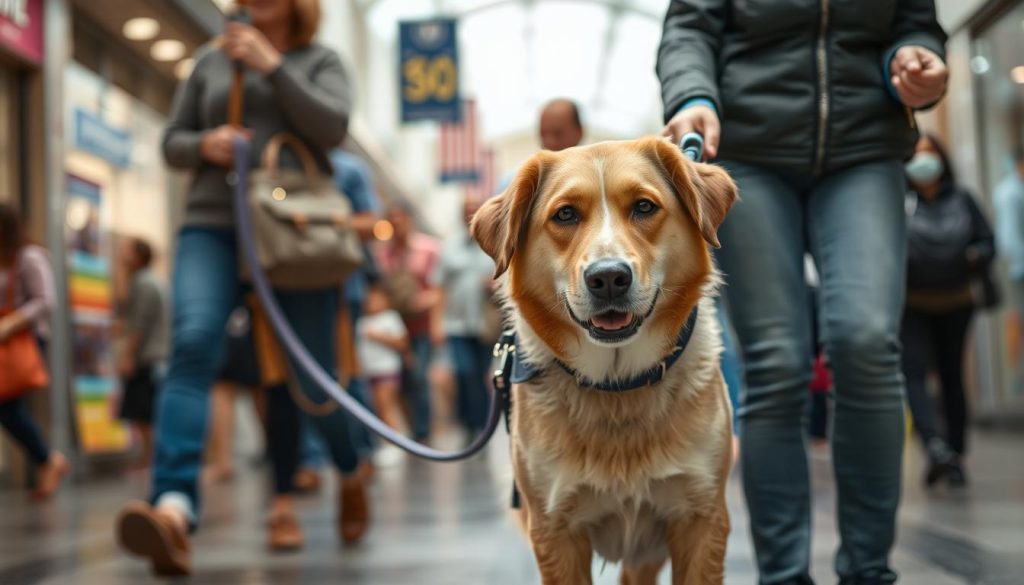
Begin public access training slowly. Start in quiet, less crowded spots and move to busier areas later. Reward your dog for good behavior and staying focused on you. Being consistent is crucial for service dog training in public.
Some important skills to practice during public outings with your service dog include:
- Heel walking without pulling on the leash
- Sitting or lying down calmly beside you
- Not soliciting attention from other people
- Ignoring distractions like food, other dogs, or children
A well-socialized service dog can go anywhere pets are allowed, and many places they’re not. They should not show fear or get too excited. Proper training lets you and your dog move through public spaces with confidence.
Task-Specific Training Techniques
Teaching your service dog specific skills is crucial. These skills should match your needs and disabilities. Whether it’s helping with mobility, alerting you to medical issues, or fetching items, training is essential. It ensures your dog can support you effectively.
To start, break down each skill into smaller steps. For example, if your dog needs to open doors, begin by teaching them to touch the handle with their nose or paw. Then, move on to having them pull the handle down and open the door.
Being consistent and patient is key in training service dogs. Always celebrate your dog’s achievements, no matter how small. Use positive reinforcement to keep them motivated. With time and effort, your service dog will learn the tasks needed to improve your daily life.
How to Train a Service Dog: Best Practices and Tips
Training a service dog needs patience, consistency, and a good plan. It’s key to have a regular training schedule. This should include daily practice and tasks that get harder over time. Stick to a routine and set aside time for training to help your dog learn better.
When you hit training bumps, stay positive and patient. Every dog learns differently, and it’s okay to have setbacks. Celebrate your dog’s wins, big or small, and use positive rewards to encourage good behavior. If you’re really stuck, get help from a pro service dog trainer.
To make training better, break big tasks into smaller steps. Focus on one skill at a time. Keep training sessions short and fun, ending on a high note. Make sure your dog gets enough play, exercise, and brain work to stay happy and healthy. By following these tips, you’ll train a service dog that’s reliable and skilled.
Positive Reinforcement and Reward-Based Training
Training your service dog with positive reinforcement is the best and kindest way. This method uses treats, praise, and rewards to motivate your dog. It helps them learn and do tasks with joy.
To keep your service dog motivated, find out what they love most for rewards. Break down big tasks into smaller steps. Reward them for each step they complete.
Being consistent is crucial. Always reward the right behavior right away. This helps your dog understand the link between their actions and the reward.
But remember, rewards aren’t just about treats. Verbal praise, petting, and playtime also motivate dogs. Change up the rewards to keep training fun and prevent focus on just one thing.
As your service dog gets better, start using rewards less often. But still give them a reward now and then. This keeps them motivated. With patience and positive reinforcement, you and your service dog will grow closer. They’ll become a true companion and helper.
Quick Recommendation: Our blog is filled with tips and tricks for training your puppy or dog. If you are seeking a comprehensive training program, we recommend K9 Training Institute.
Maintaining Your Service Dog’s Training
Keeping your service dog’s training up is key to their reliable help. Regular practice of what they’ve learned keeps them sharp. Make training a part of your daily life to strengthen your bond and keep their skills sharp.
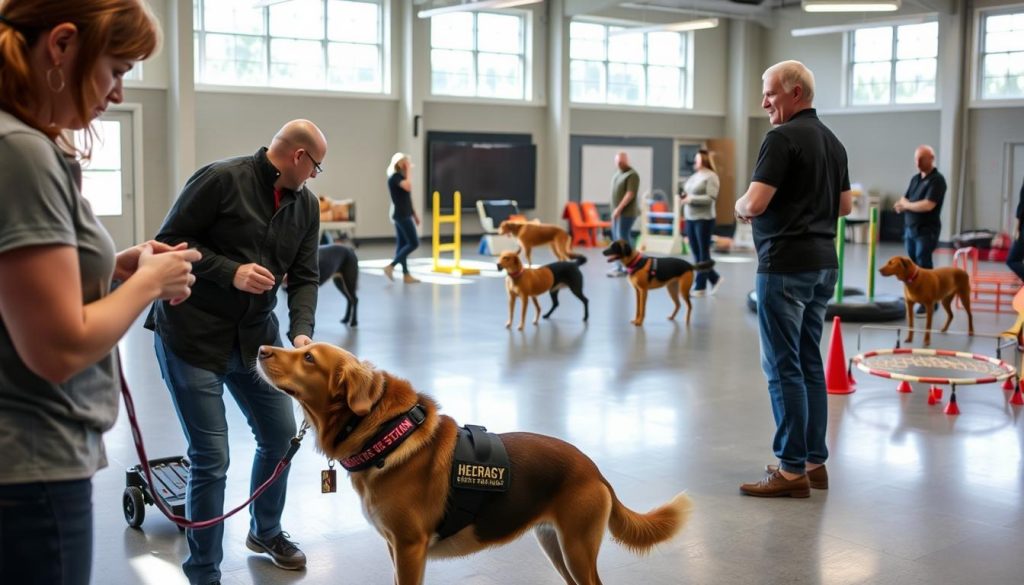
Every day, set aside time for short training sessions. Review basic commands and specific tasks your service dog does. Even 10-15 minutes a day can help a lot. Use positive methods like praise and treats to reward them.
Also, think about getting training refreshers with a pro trainer now and then. These sessions can improve your dog’s skills and tackle new challenges. Many service dog groups offer training and support for teams.
Remember, your service dog is a working animal, not just a pet. Keep clear rules and expectations, even when they’re not working. With hard work and consistency, you’ll have a strong, lasting partnership.
Working with Professional Service Dog Trainers
Working with a professional service dog trainer is very helpful. They know how to train your dog to help you. They make sure your dog learns all the tasks it needs to do.
These trainers have one-on-one sessions with you and your dog. They create a plan that fits your needs and your dog’s abilities. You’ll learn how to work well with your service dog.
To find a trainer, look online or ask your vet. You can also talk to other service dog owners. Choose someone who is certified and has experience with service dogs.
Using a professional trainer means your dog gets the best training. It also helps you learn how to use your service dog every day. Together, you and your dog can face the world with confidence.
Service Dog Certification and Legal Requirements
Understanding the legal aspects of service dogs is key. In the U.S., service dogs get special treatment under the Americans with Disabilities Act (ADA). This law lets them go where pets usually can’t. But, it’s important to know there’s no single way to certify a service dog.
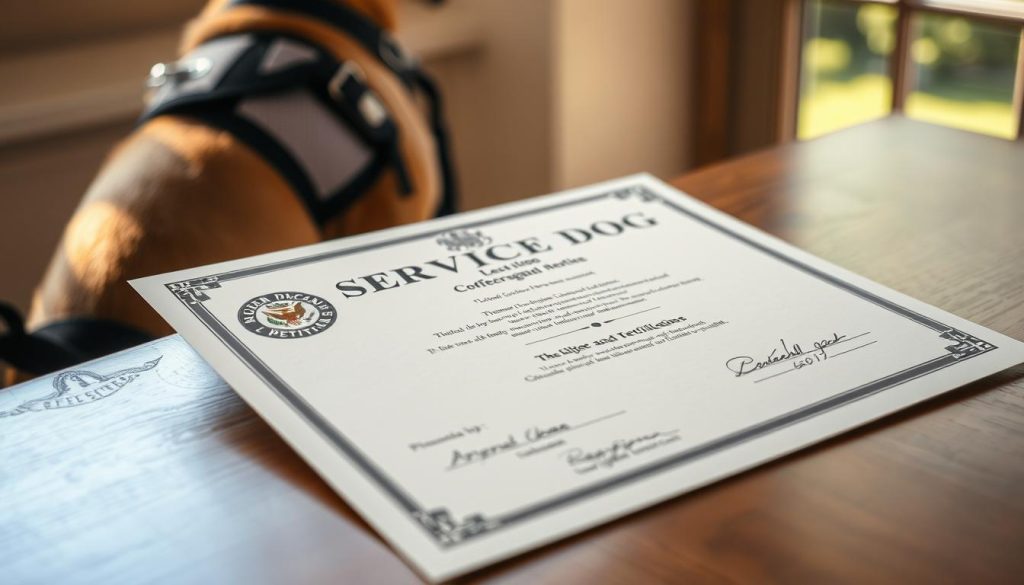
Some groups offer service dog registration and certification. But, these are not needed by law. The ADA doesn’t ask for any special training or certification for service dogs. It just says a service dog is one trained to help someone with a disability.
To be a service dog, the animal must be trained for specific tasks. For example, guiding the blind, alerting the deaf to sounds, or helping with mobility. Emotional support animals and therapy dogs, though helpful, don’t get the same legal rights as service dogs.
Training your service dog well is crucial. They must be well-behaved and able to do their tasks reliably. Even though no certification is needed, working with a professional trainer is a good idea. They can help you meet legal standards and train your dog effectively.
As a service dog handler, you must know and follow the law. This means understanding your rights and any duties when you’re out with your dog. By keeping up with the law and training your dog well, you can move through public spaces easily. This helps keep the service dog community strong and respected.
Caring for Your Service Dog’s Well-being
As a service dog owner, taking care of your furry friend is key. Their health, nutrition, and mood affect how well they can help you. By giving them the right care, you keep them happy, healthy, and ready to assist.
Keeping your service dog healthy means regular vet visits. Make sure they’re up-to-date on shots, meds, and dental care. Also, stick to a grooming schedule to keep their coat, ears, and nails in good shape.
Good nutrition is vital for your service dog’s health. Feed them a high-quality, balanced diet that fits their age, size, and activity level. Talk to your vet to find the best food and amounts for your dog. Always give them fresh water and avoid giving them human food, which can cause problems.
Your service dog’s emotional health is also crucial. They can pick up on your feelings and get stressed or anxious. Give them daily exercise, playtime, and chances to relax. Use positive training to keep their skills sharp and mind active. Watch for signs of stress, like heavy breathing or pacing, and comfort them when needed.
By focusing on your service dog’s health, nutrition, and emotional well-being, you ensure they’re a reliable and loving partner. Their happiness and health are key to their success as an assistance animal.
Conclusion
Starting your service dog training journey is a rewarding path. It needs dedication, patience, and a strong bond with your dog. By following this guide, you can teach your dog to help you every day.
Training a service dog is a detailed process. It includes basic obedience, socialization, and learning specific tasks. Positive reinforcement and professional trainers make the training smoother and more effective.
As you and your service dog grow closer, you’ll appreciate the trust and companionship they offer. A well-trained service dog brings independence and value to your life. With love and commitment, you and your dog will create a lasting partnership.
Begin your service dog training with confidence. You have the knowledge and resources to succeed. Your journey will be filled with rewards. Good luck, and enjoy the amazing experience of building a lifelong partnership with your service dog!
Quick Recommendation: Our blog is filled with tips and tricks for training your puppy or dog. If you are seeking a comprehensive training program, we recommend K9 Training Institute.