
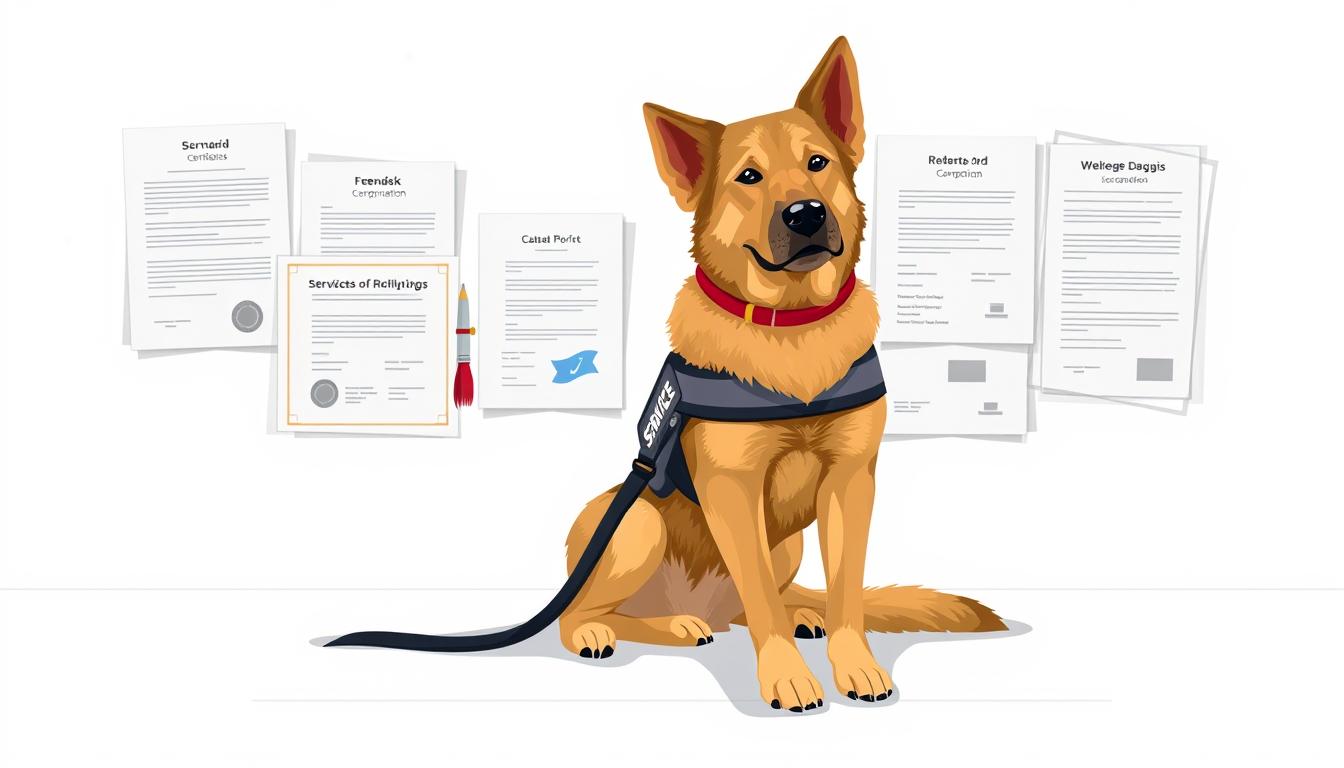
If you have a disability and need a service dog, it’s crucial to get your dog certified. The rules for service dog certification vary by country and state. But, there are common standards you should know.
To legally have your dog as a service animal in the U.S., you must meet certain training criteria. You also need the right documentation. The process of registering your service dog is more than just paperwork. Your dog needs to be trained to help with your disability.
Choosing the right breed and keeping your dog’s skills sharp is key. Certifying a service dog takes time, effort, and dedication. This guide will help you through the steps to certify your service dog. This way, you can enjoy more independence and access with your dog by your side.
Before we dive into the details of service dog certification, let’s understand what qualifies as a service dog in the U.S. The Americans with Disabilities Act (ADA) says a service animal is a dog trained to help someone with a disability. The dog must be trained to do a specific task to assist the person with their disability.
Quick Recommendation: Our blog is filled with tips and tricks for training your puppy or dog. If you are seeking a comprehensive training program, we recommend K9 Training Institute.
Understanding Service Dog Certification
Service dog certification makes a dog officially recognized as a trained animal. It helps people with disabilities. The dog must meet legal and training standards to assist its handler in public.
In the U.S., there’s no one service dog certification program. But, the Americans with Disabilities Act (ADA) guides what makes a service dog. It also protects the rights of people with disabilities to have their service dogs with them in public.
To qualify as a service dog under the ADA, the dog must be trained for specific tasks. These tasks help the handler with their disability. For example, guiding the blind, alerting the deaf, or helping during seizures.
Even though some groups offer service dog certification, it’s not legally required. The ADA doesn’t need a specific certification or ID for service animals. It focuses on the dog’s training and its ability to help its handler.
When looking for service dog certification, choose reputable trainers and organizations. They should follow the legal requirements for training and behavior. A well-trained service dog can greatly help people with disabilities, making their lives better and more independent.
Qualifying Disabilities for Service Dog Certification
To get a service dog, you need a disability that the Americans with Disabilities Act (ADA) recognizes. Disabilities like visual or hearing loss, mobility issues, and mental health problems qualify. For example, you might have a visual impairment, hearing loss, or a condition like PTSD.
If you have one of these disabilities, you’ll need a doctor’s note to prove it. This note should explain your disability and how a service dog can help you every day. Remember, emotional support animals don’t need the same training and aren’t covered by the ADA’s rules.
When you apply for your service dog, bring your disability proof and any medical records. This makes the process easier and lets you enjoy the benefits of having a trained service dog.
Selecting the Right Service Dog Breed
Choosing a service dog is a big decision. The right breed can greatly help your service dog assist you well. Think about the breed’s temperament, trainability, and physical traits that match your needs.
Popular service dog breeds include Labrador Retrievers, Golden Retrievers, German Shepherds, and Poodles. These dogs are smart, loyal, and adaptable. Labrador Retrievers and Golden Retrievers are friendly. German Shepherds are strong and protective.
Think about your lifestyle and what tasks your service dog will do. For mobility help, a big breed like a German Shepherd or Labrador Retriever is good. For emotional support or alerting to medical issues, a smaller breed like a Poodle or Cavalier King Charles Spaniel might be better.
Finding the right service dog breed is all about your needs and what you prefer. Research different breeds and talk to a professional trainer or service dog organization. With the right breed and training, your service dog will be a great support in your life.
Essential Service Dog Training
To become a certified service dog, your furry friend must go through a lot of training. This training meets strict service dog standards. It ensures your dog can do important tasks and behave well in public.
Service dog training covers obedience, task-specific skills, and public access. Obedience training helps your dog behave well and pay attention. Task-specific training teaches your dog to help with your disability. Public access training helps your dog move through different places calmly and confidently.
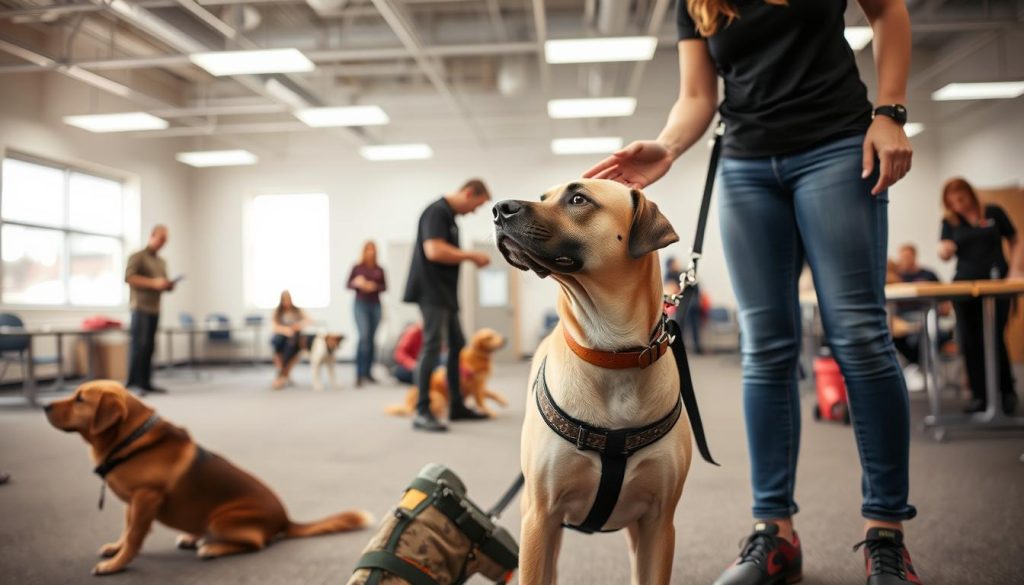
The time and effort needed for service dog training vary. It can take six months to two years to finish. During this time, your dog will learn from experienced trainers to master the skills needed.
Consistency and repetition are crucial for service dog training. Your dog will learn through positive methods like praise and rewards. As a handler, you must also keep up your dog’s training with practice and ongoing learning.
Service Dog Certification Requirements
To get your service dog certified, you need to follow a few important steps. First, your dog must pass a public access test. This test shows it can stay calm and behave well in public places. It checks if your dog is obedient, social, and can handle distractions.
Your service dog also needs to show it can do the tasks it was trained for. These tasks might include alerting you to health issues, helping with balance, or providing comfort during anxiety. Your dog should do these tasks well and as needed.
It’s also important that your dog is healthy and well-behaved. It should have all its vaccinations up to date and see the vet regularly. Your dog should be calm and follow commands, even in stressful situations. Any aggressive behavior means it can’t be a certified service animal.
Following these rules helps make sure your dog is ready to assist you. A certified service dog is a big help in your daily life. They are more than just a pet; they are a key partner in overcoming disability challenges.
Obtaining Necessary Documentation
Getting service dog certification means you need to collect important documents. You must get a letter from your doctor. This letter should say you have a disability and need a service animal.
Your doctor or mental health professional should explain how a service dog helps you. They should talk about how it assists you in daily tasks.
You also need to gather your service dog’s training records. These records prove your dog is trained to help with your disability. Keep a detailed log of your dog’s training, including how long each session was and what skills were learned.
Make sure you know what’s needed for service dog certification. You might need to fill out a registration form, do a behavioral assessment, and pay a fee. Check the guidelines from the certifying body to make sure you have everything.
Quick Recommendation: Our blog is filled with tips and tricks for training your puppy or dog. If you are seeking a comprehensive training program, we recommend K9 Training Institute.
Registering Your Service Dog
Understanding the service dog registration process is key. In the United States, there’s no law that says you must register your service dog. Yet, some groups offer optional registration or databases for service dogs.
These optional registrations can make it easier to show your dog is a service animal. But, they’re not needed to meet the ADA’s service dog rules. The ADA lets people with disabilities bring trained dogs into public places.
If you want to register your service dog, make sure to check the organization’s reputation. Look for ones that offer real benefits like an ID card or vest. These can help identify your dog as a service animal.
Even without registration, the main thing is your dog’s training and ability to help you. They must also behave well and stay clean in public. Focus on these key points to confidently go out with your dog.
Service Dog Identification Gear
Having a service dog means you need to make sure they’re easily recognized in public. This helps prevent misunderstandings and confrontations. Using the right gear is key to clearly show your dog is a working animal.
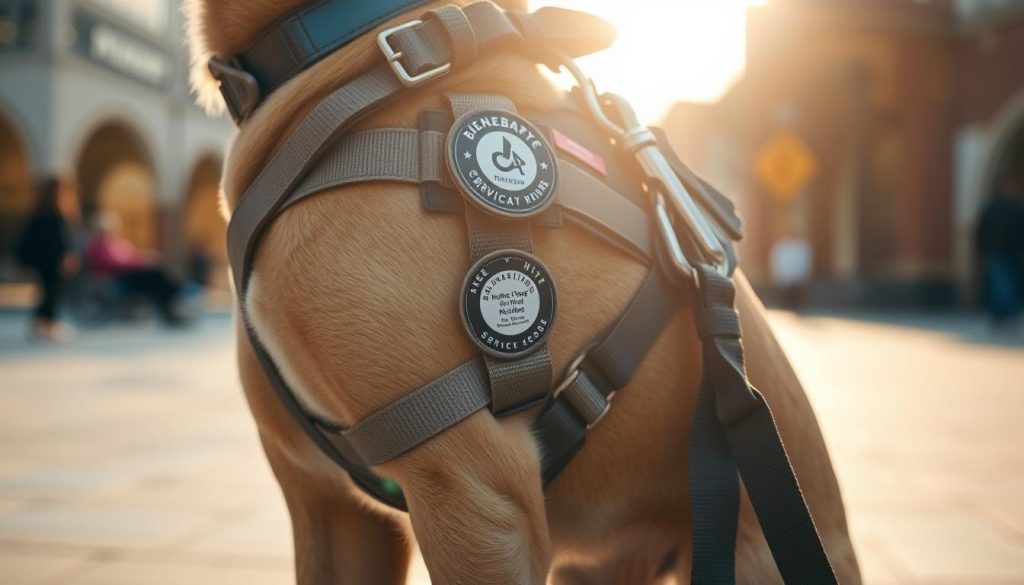
Common gear includes vests, harnesses, and ID badges. A vest or harness with “Service Dog” written on it is a clear sign. These come in many colors and styles to match your taste and your dog’s comfort. An ID badge on the vest or harness can share more about their role and training.
Choosing the right gear is a big part of the certification process. Look for durable, high-quality items that last. Make sure it fits well to keep your dog comfortable and able to move freely. With the right gear, you and your service dog can move through public spaces with confidence.
Maintaining Your Service Dog’s Certification
Congratulations on getting your service dog certified! But, keeping their certification up is a big job. You need to follow service dog training standards and keep their skills sharp.
It’s important to do regular training sessions. This helps your service dog stay obedient and skilled. Spend time each day practicing commands and tasks. Also, expose them to different places to keep them well-adjusted.
Don’t forget about your service dog’s health. Take them to the vet regularly to check their health. Good food, exercise, grooming, and managing stress are key to their well-being.
As a handler, you must follow public access rules. Keep your service dog in control and clean up after them. Being responsible helps keep the public’s trust in service dogs and keeps your dog’s certification.
Navigating Public Spaces with Your Service Dog
As a service dog handler, you have the right to bring your service dog into public spaces. The Americans with Disabilities Act (ADA) allows service dogs in places like restaurants, stores, and on public transport. It’s key to know your duties and follow best practices when taking your service dog out.

When you enter a public place with your service dog, be ready to answer two questions. Staff can ask: (1) Is the dog a service animal because of a disability? and (2) What tasks has the dog been trained for? You don’t have to share your disability or show what your dog can do.
To make things easier for everyone, follow these tips:
- Keep your service dog under control with a leash, harness, or voice commands
- Ensure your service dog is clean and not bothering others
- Carry essentials like waste bags, water, and food for your service dog
- Know where service dogs can’t go, like some hospital areas or sterile zones
Knowing your rights and being a responsible handler lets you move through public spaces with your service dog easily. This helps keep the service animal community strong.
Emotional Support Animals vs. Service Dogs
Emotional support animals (ESAs) and service dogs both help their owners in different ways. ESAs give comfort and emotional support to people with mental health issues like anxiety or depression. Service dogs, however, are trained to do specific tasks for those with disabilities, such as physical or mental challenges.
Getting an ESA is easier than getting a service dog. ESAs don’t need special training but must be recommended by a mental health professional. The owner needs an ESA letter from their therapist or doctor to prove the animal’s importance for their mental health.
Service dogs, on the other hand, go through a lot of training. They learn to help people with visual, hearing, or mobility issues. To become certified, a service dog must show it can do its job well.
ESAs have some rights, like living with their owners in places that usually don’t allow pets. But they don’t have the same freedom as service dogs. Service dogs can go anywhere with their owners, like restaurants and stores, thanks to the Americans with Disabilities Act (ADA).
Conclusion
Certifying your service dog is key to having them by your side in public. It ensures they can help you as needed. By knowing the rules and following the right steps, you and your dog can face life together confidently.
Choose a dog breed that’s good for service work. Train them well and get the right papers from a doctor. Also, register your dog with a trusted group. Having ID for your dog shows they’re working.
Keeping your service dog certified means constant training and good behavior in public. With effort, your dog will be more than a pet. They’ll be a partner in helping you through daily life. Make sure to certify your service animal properly. This way, you and your dog can live better and more freely.
Quick Recommendation: Our blog is filled with tips and tricks for training your puppy or dog. If you are seeking a comprehensive training program, we recommend K9 Training Institute.