

Welcome to the world of dog training! Whether you’re a fresh pet parent or itching to polish your skills, getting the basics right is crucial. In this article, we’ll dive deep into the essentials of dog training for beginners. You’ll find everything you need to kickstart your journey in teaching your dog at home.
Training your dog does more than just teach it tricks. It’s about strengthening the bond you share and living in harmony. Experts believe that a well-trained dog makes life better for both the pet and its owner. So, let’s get started and learn how to bark up the right tree!
Quick Recommendation: Our blog is filled with tips and tricks for training your puppy or dog. If you are seeking a comprehensive training program, we recommend K9 Training Institute.
Understanding Your Dog’s Behavior
Learning about dog behavior is key for good training. Every tail wag, bark, and body stance tells us how they feel. Knowing their body language helps us talk better with them.

A wagging tail doesn’t always show happiness. How fast or in what direction it wags tells us more, like if they’re excited or anxious. This insight makes training go smoother.
Experts like Patricia McConnell highlight the need to understand dog body language. Getting it wrong can cause confusion and slow down learning. By cracking the code of dog signals, training becomes a teamwork effort.
Essential Dog Training Techniques
Understanding the basics of dog training is key. Start with habituation to help your dog adapt. They’ll get used to different places, noises, and experiences this way. This reduces their fear and anxiety when they encounter something new.
Socialization is also very important. It involves introducing your dog to many people, animals, and places early on. This turns them into friendly, well-behaved pets. Dog trainer Renee Sweeney says it’s vital for preventing future behavior issues.
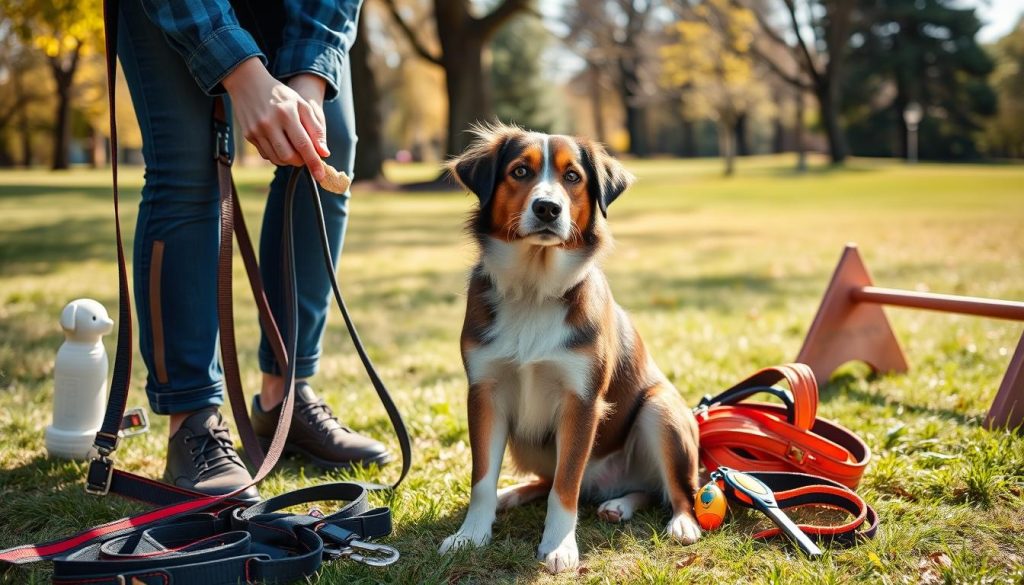
Learning basic commands is essential. Teach your dog words like ‘sit’, ‘stay’, ‘come’, and ‘heel’ to control their actions and keep them safe. Use treats and praise to make them respond better, suggests trainer Victoria Stilwell.
Practice these techniques at home to be consistent. Use regular training sessions, patience, and rewards. This strengthens the training in your dog’s daily life. By doing these, you’ll create a bond based on trust and communication with your pet.
Obedience Training for Dogs
Obedience training is key for a dog’s growth and happiness. It’s valuable for all dog owners. It includes teaching commands like sit, stay, and come. Learning these basics leads to more advanced training and a well-mannered dog.
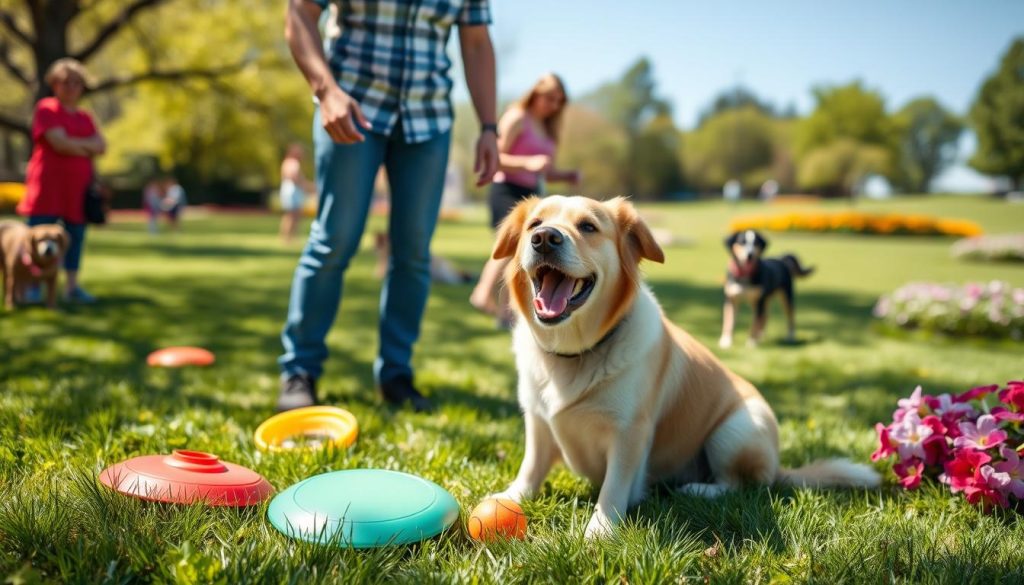
Training your dog brings better behavior and strengthens your bond. It creates a disciplined setting and builds trust. Achieving discipline takes patience and steady effort.
Training begins with positive reinforcement, making it fun for you and your pet. The American Kennel Club highlights the need for consistency and positive methods. With ongoing practice, your dog will better follow commands. This smooths the path to more advanced training.
Positive Reinforcement Training
Positive reinforcement training is an effective way to teach dogs. It uses rewards to encourage good behavior. This method helps create a strong bond between you and your dog by always promoting positive actions.
Studies show the benefits of this training on a dog’s mind. When a dog does something good, like sitting, giving them treats or love makes them want to do it again. This method is fun for the dog and builds trust.
To train your dog well, you need to know what they like. Some dogs love treats, while others prefer kind words or playtime. Giving a reward right after good behavior helps your dog connect the action with something positive. This makes learning what you want easier for them.
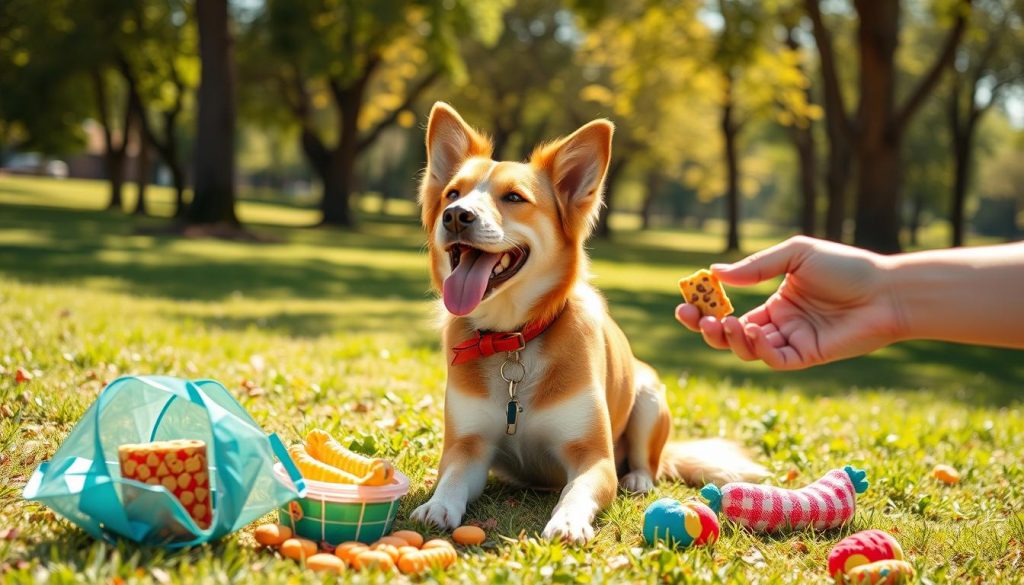
For effective praise, always be consistent with rewards. Start with special treats, then use them less as your dog learns. Advice from experts, like the American Veterinary Society of Animal Behavior, says tailoring rewards helps a lot in training.
Remember, being patient is crucial. Celebrate every small step forward. Dogs learn at their own speed. By using rewards and focusing on good actions, you are helping your dog succeed and building a great relationship.
Clicker Training Basics
Clicker training is a great way to talk to your dog while training. You use a small clicker to make a sound. This sound tells your dog they did something right. It’s a good way to teach your dog new things step by step. You can mark the exact moment they do something you like.
To start, you need a clicker and treats. First, make the clicker mean something good by giving treats when you click. This helps your dog know a click means a treat is coming. Once they get it, you can teach them more things with the clicker.
Clicker training is very clear and always the same. Unlike our voice, which can change, the clicker doesn’t. This makes learning quicker and less confusing for your dog. It’s also a kind way to train. Your dog will stay happy and interested without feeling scared or punished.
It’s easy to use clicker training every day. Begin with simple commands like “sit” or “lie down.” Click the moment your dog does it right, and then give them a treat. Later, you can stop using treats as much but keep using the clicker.
Training experts say to keep lessons short and often. This keeps your dog from getting too tired or bored. Celebrate their progress and slowly teach them more. Clicker training makes you and your dog closer. Both of you will find training fun.
Crate Training Tips
Teaching your dog crate training can change things for both of you. It makes for a safe haven and speeds up housebreaking. If done right, crates are cozy and secure for them.
Success comes from a regular crate routine. Begin with crate time during meals, adding treats and toys to make it fun. Slowly, let your dog stay in the crate longer, keeping it a happy place.
Experts, like those from the American Kennel Club, say to place the crate where your family hangs out. It makes your dog feel included and comfortable in their new spot. At night, moving the crate close to you helps them feel safe and less anxious.
Housebreaking is easier with crate training. Dogs don’t like to mess where they sleep. This helps them learn to wait until they’re out of the crate, leading to fewer accidents at home.
It’s important to not use the crate as punishment. It should be a peaceful retreat. With time and the right approach, you and your dog will enjoy the benefits of crate training.
Quick Recommendation: Our blog is filled with tips and tricks for training your puppy or dog. If you are seeking a comprehensive training program, we recommend K9 Training Institute.
Leash Training for Dogs
Leash training is key for fun walks with your dog. It’s important to start off right. Introduce your dog to the leash in a relaxed environment. Have them wear it inside for a bit to get used to it.
Keeping a steady pace and a loose leash matters a lot. It teaches your dog to follow without feeling held back. To stop pulling, use treats and happy words. Give rewards right when they walk well to build good habits.
Patience and consistency are crucial in leash training. Practice often with clear signals to guide your dog. With these skills, you and your dog will have happy, calm walks together.
Advanced Dog Training Challenges and Solutions
Training your dog in advanced commands brings unique challenges. You might face issues like behavior correction or training hurdles. Knowing these challenges is crucial for success.
Finding out what your dog needs is the first step. Being patient and persistent is key. This is because some dogs learn complex commands slowly.
Behavior correction is another important part. Talking to dog behavior professionals can help. They offer tips on fixing ongoing problems. Using their advice can greatly improve your training.
To overcome training challenges, break commands into smaller steps. Always reward your dog’s small wins. This method helps in teaching advanced commands easily.
Remember, advanced training takes time. Be consistent and use expert tips. Also, communicate clearly with your dog. This way, you can beat any advanced training challenge and have a well-trained dog.
Conclusion
Your journey in training your dog is full of ups and downs. It teaches you about your pet’s behavior and how to overcome training hurdles. Each step is important for creating a disciplined and joyful dog.
To succeed, remember to always be consistent and patient. Use positive methods, clicker training, or crate and leash training effectively. These basics are vital for keeping up with training over time.
Top trainers stress sticking to a regular training schedule. Include training in your daily activities to foster good habits. This makes your hard work last. Understand that every dog is different, needing flexible and committed training approaches.
As you train your dog, your hard work will pay off. A well-trained dog is not just obedient but also deepens your connection with them. Keep in mind these key points as you help your pet become the best they can be. Enjoy the training process!
Quick Recommendation: Our blog is filled with tips and tricks for training your puppy or dog. If you are seeking a comprehensive training program, we recommend K9 Training Institute.
BTW: If you are interested in everything from nutritional advice and natural health solutions to stress-relief techniques and overall wellness tips, check out our friends at PawfectlyHealthyPets.com.